Zinc pyrithione
The scalp active in most drugstore shampoos. The European Union prohibited it in cosmetics from 1 March 2022; it is still permitted in the United States. Becon's formulas are built without it.
New at Litko
Becon is a Korean professional scalp care line — the kind sold to salons and clinics in Korea rather than stacked on a drugstore shelf. It is made by COSMAX. This is the three-step set we would start you on.

“I can’t stop touching my hair, it feels so much fuller and softer …”
Trusted where hair is a profession
Becon is a professional line, used in salons and clinics and by more than 1,500 scalp care brands in Korea — including several of the country's largest salon chains. The formulas sold here are the same ones used in those chairs.


Juno Hair alone runs more than 180 salons across Korea. Figures reported by Becon.
The ingredients that do the recognizable work, and what each one is.
Full ingredient lists are printed on every bottle. Ask us if you would like them before you buy.
What's not in it
The scalp active in most drugstore shampoos. The European Union prohibited it in cosmetics from 1 March 2022; it is still permitted in the United States. Becon's formulas are built without it.
Parabens are a widely used preservative class; PEGs are common emulsifiers and solvents. Neither appears in any of the five Becon formulas.
Also formulated without sulfates, silicones, phthalates, and synthetic colorants.
Produced by COSMAX, one of the world's largest cosmetics manufacturers, under CGMP and ISO 9001 / ISO 14001 systems.
No sulfates, silicones, parabens, synthetic colorants, or phthalates. Vegan certified by V-Label.
Slightly acidic at pH 5.0–6.0, close to the scalp's own. Rated Excellent by Dermatest.
Formulated from a database of more than 40,000 analyzed ingredients, and built around 30 scalp types Becon maps with an AI scalp analysis and a questionnaire.
Every formula carries Glycine Soja (soybean) germ extract, grown and extracted under Becon's own patent.
A fresh floral top note over a soft base of woods and musk.
Go by how your scalp feels two days after washing.

For a scalp that reacts easily. Cleanses gently without stripping, leaving things calm and comfortable.

For roots that turn greasy by evening. Lifts oil and buildup with a brisk, cooling mint finish.

For a tight, flaking scalp. Loosens dry flakes while putting moisture back in.
If you don't know which you are, there's a simple check. Wash as normal, use nothing else, and look at your parting four hours later. Shiny at the roots, or a mark left on a pressed tissue, means oily. Tight, dull, and no mark means dry. If your scalp objects to most of what you put on it, treat it as sensitive and start with I am Picky — you can switch on the second bottle.
Work into a wet scalp with your fingertips, not your nails. Let it sit a minute before rinsing — that minute is where the cleansing happens.
I am Silky is safe at the roots, so you don't have to keep it to the ends. Rinse thoroughly.
On a towel-dried scalp, part the hair and apply along the partings. Massage in and leave it.
Three times a week suits most people. Daily washers can shampoo more often and use the ampoule every other day.
$105.00
Three full-size products. Free US shipping over $75.
Most Western hair care begins at the fiber. The shelf is organized around what you want your hair to look like — smoother, fuller, less frizzy — and the scalp is treated as the place hair happens to grow out of.
Korean scalp care starts a layer earlier and treats the scalp as skin. That single move explains most of what looks unusual about this routine: why the shampoo is chosen the way you would choose a cleanser, by whether the skin runs oily, dry, or reactive. Why the conditioner is formulated to be safe at the roots instead of kept away from them. And why there is a third step at all — the ampoule is a leave-in for the scalp, closer to a serum than to anything in a Western hair aisle.
None of it is complicated. It is three steps and about five minutes. It is just organized around a different starting question.
Most shampoo is sold on hair type — straight, curly, colored. Becon starts a layer earlier, with the skin underneath. An oily scalp and a dry, tight one want almost opposite things from a cleanser, which is why this routine begins with a choice rather than a default.
The two steps that follow stay the same for everyone: a conditioner gentle enough to use at the roots, and a leave-in ampoule for the scalp itself.
Three full-size products at salon sizes. The shampoo and the I am Silky conditioner are 17.6 fl oz each — roughly double a standard retail bottle — and the I am Nourisher scalp ampoule is 1.7 fl oz. Washing three times a week, that is months of a routine rather than weeks, which is the number worth dividing the price by.
"Professional" here describes where a product is sold, not a grade and not an approval: in Korea it means a line supplied to salons and clinics through trade suppliers rather than into mass retail. That is also why the shampoos are split three ways by scalp type instead of being sold as one bottle for everybody — a stylist would not hand the same bottle to every head in the chair.
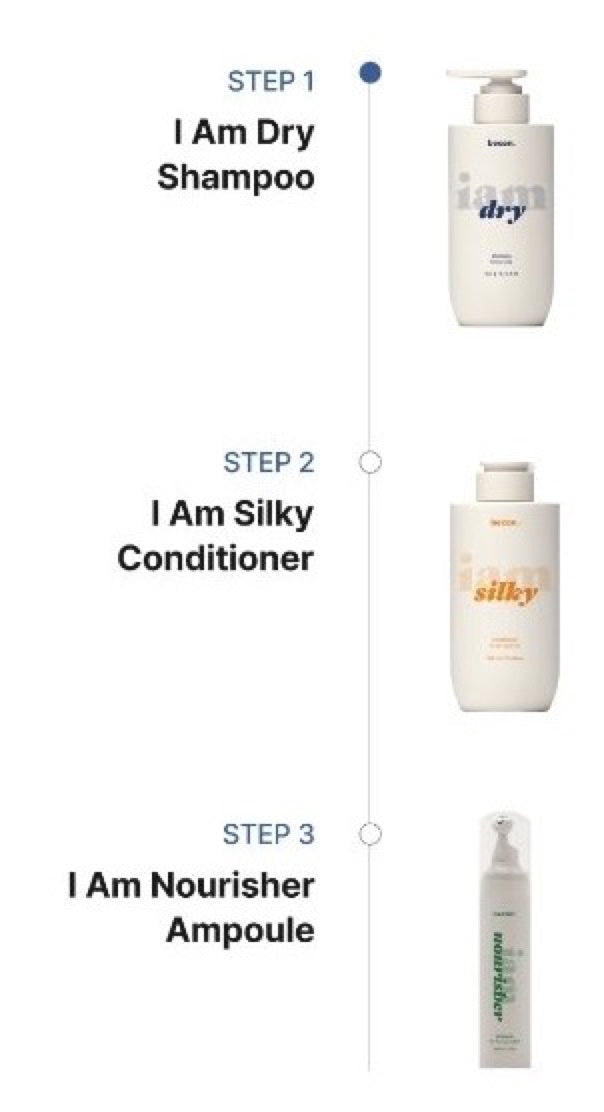
The scalp ampoule is the step most people here haven't used before. A scalp ampoule is a light leave-in liquid you apply directly to the scalp along a parting, not to the lengths of your hair — closer to a skincare serum than a hair oil.
Litko Giftshop is a Korean gift shop in Dallas, Texas, and the Becon line sits on the shelf here as well as shipping nationwide. If you would rather choose between the three shampoos in person, come in and we will help you pick.
2534 Royal Ln, Suite 123, Dallas, TX 75229 · Contact us
Becon products are cosmetics. They are formulated to cleanse, condition, and care for the scalp and hair, and are not intended to diagnose, treat, cure, or prevent any medical condition. If you have persistent scalp irritation, flaking, or hair loss, please see a dermatologist.